PERSONALIZED NECK BRACES FOR A UNIQUE FIT


OUR TECHNOLOGY
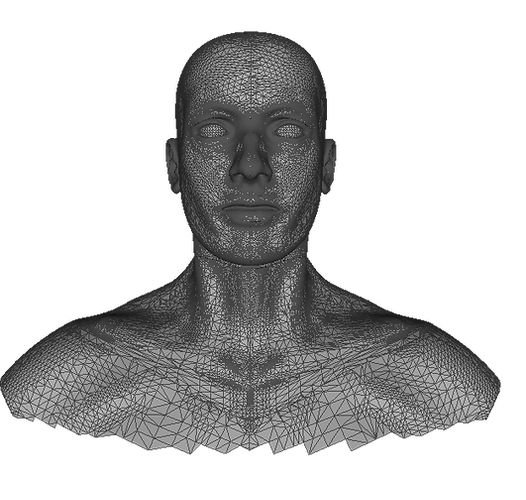
01 / SCAN
Perform patient’s 3D scan

02 / CONVERT
Convert STL file into a CAD model

03 / FORM
Fill out a personalization form to define the function of the brace
04 / DESIGN
Use the CAD model and the personalization form to design the neck brace around the defined geometrical requirements.
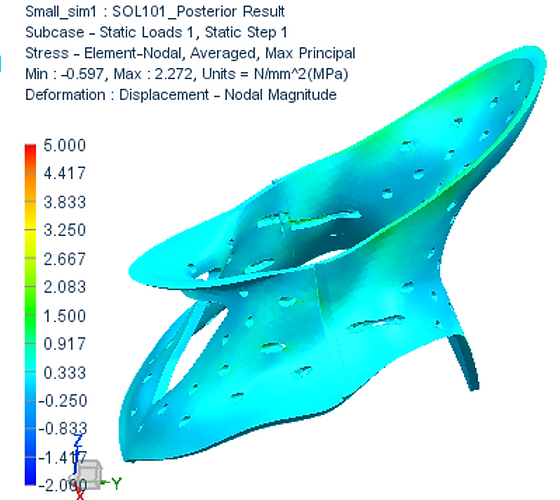
05 / REFINE
Refine structure to match defined immobilization level requirements

06 / PRINT
3D print the personalized neck brace

THE STORY
At any given time, 10% of US residents feel neck pain. And, of those US residents, up to 70% of them will have neck related problems that lead to horrible neck pain in their lives. This neck pain that affects so many people not even in the United States, but worldwide, is caused by an abundance of things. Yet, despite neck pain being so common, there aren’t any good ways to recover from it. Often, doctors only offer neck braces to help with neck pain. Unfortunately, the neck braces they offer aren’t made to help the wearer as much as they should.
Common cervical collars, despite being so widely used, aren’t as helpful as some would like to think they are. The choices for neck braces are very limited. When different size options are offered, there are only 3 or 4 choices (small, medium, large, x-large). These size options are based on a table of measurements, and the patient’s physician decides which neck brace best fits the wearer’s neck size. When it comes to the neck brace’s morphology, there is only two major options - a flimsy, foam neck brace with Velcro that offers little support that is meant for tasks where head movement is required (e.g. driving) and a sturdy (and rather bulky) neck brace that paralyzes the neck and offers more support.
Car accidents are one of the main contributors of neck pain and happen on a daily basis, impacting the lives of many. According to the Association for Safe International Road Travel (ASIRT), 20-50 million people are injured a year. That is close to 100,000 people a day and 69 people a minute.
Between the many types of injuries one can get in a car accident, such as whiplash, brain injuries, and broken bones, and the increasingly large amount of people who get injured a year, the medical field should be prepared to help those with car accident induced injuries. This is especially important with whiplash, one of the most common injuries in car accidents. Whiplash, which is caused by a rapid movement of the neck, causes debilitating neck pain, headaches, and can also bring difficulties concentrating and memory problems. And, despite being such a common problem, the medical world offers few viable solutions for it. Doctors often give patients neck braces that, unfortunately, offer little relief to the wearer.
Everyone has a risk of getting into car accidents, and 2 years ago, we were rear ended and given identical neck braces to treat our whiplash. While we have completely different body shapes, height, and weight, as well as our difference in gender, we assumed that the similarities between our injuries was to blame for us having such similar treatment plans. Yet, last year, when our mother was in a much worse car accident and had more extensive injuries, she was given the same neck brace we had received and told she would eventually get better. Much to our dismay, she didn’t.
The neck brace was made of a foam interior and a hard plastic shell exterior. It didn’t fit her properly, and she had to cut a part of the brace out to keep it from constantly digging into her head. The pain she got from wearing her neck brace ended up being worse than the pain she had from her actual injuries. This unfortunate situation inspired us.
We decided to make a neck brace that would perfectly contour the neck of the wearer, switching from a “one size fits all” ordeal to a type of support that ensures comfort and can be made of different structures and forms - treating different problems with its promise of personalization. This neck brace is designed to fit its wearer, meaning recovery is more about getting better and less about pain.
We are currently working on finalizing the first neckID prototype. After that, we hope to be able to move on to other braces, offering better solutions to more people.

Optimization of the mechanical properties in order to match the required immobilization levels to treat the pathology
Skin color and/or texture match or any other color and/or texture based on patient’s preferences
Optimum fit with patient’s anatomy regardless of stature, gender, ethnicity, …
MEET THE TEAM
Mailys Angibaud
Mailys Angibaud is currently a junior in high school and enrolled in the International Baccalaureate program at Eastside High School in Gainesville, Florida.
Mailys is responsible for the writing processes, such as the patent and website.
Pierre Angibaud
Pierre Angibaud is currently a sophomore at the University of Florida, majoring in Mechanical Engineering with a minor in Computer Science.
Pierre is responsible for all of the neckID design, including the neck brace appearance and form development, the scanning process, and the website interface.